Off-Grid Inverter vs Grid-Connected Inverter: Which Is Better for Your Solar Project?
Release time: 2026-10-29
Table of Contents
Choosing an inverter is about more than comparing power ratings or efficiency figures. The right option depends on where the solar system will operate, whether a reliable grid connection is available, and how much control you need over your power supply. An off-grid system is designed to operate independently of the utility grid, while a grid-connected system works alongside the public electricity network. Each approach serves different project requirements, and choosing the wrong one can lead to unnecessary equipment costs or limitations during operation. For distributors, installers, and project developers, understanding these differences makes it easier to select equipment that fits the installation from the beginning. This guide compares both inverter types, explains the factors that matter during purchasing, and introduces several options for residential and commercial solar applications.


What Is an Off-Grid Solar Inverter?
An off grid solar inverter is designed for solar power systems that operate independently of the public electricity grid. It converts the DC electricity generated by solar panels into AC power for household appliances, commercial equipment, or other electrical loads. Depending on the model, it may also manage battery charging, work with a generator, or support multiple inverters connected in parallel. These capabilities make off-grid systems useful in remote homes, farms, rural facilities, and locations where grid access is unreliable or unavailable.
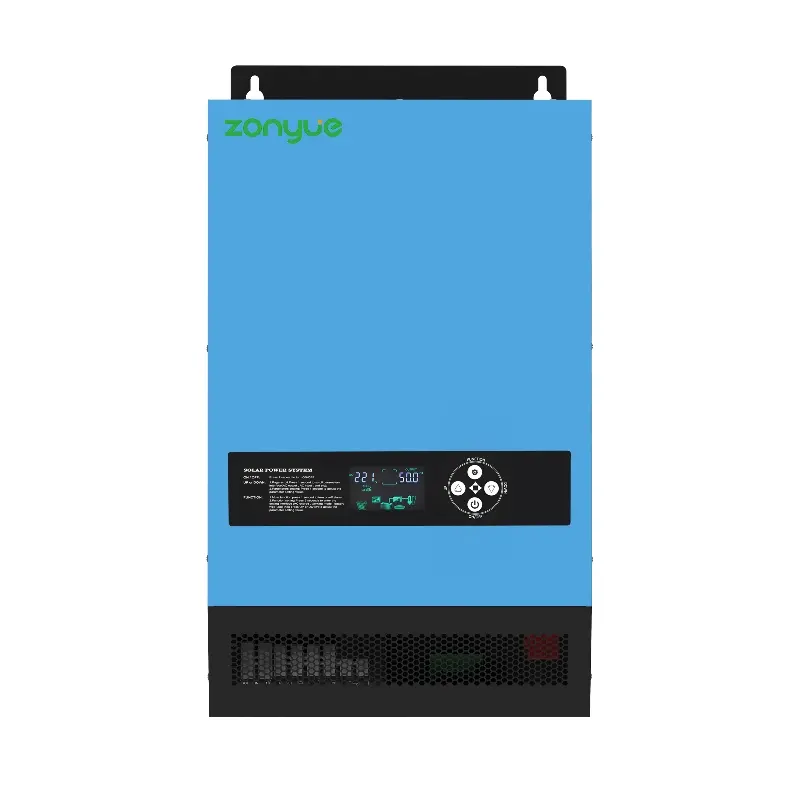
When choosing an off-grid inverter, buyers should look beyond its rated output. Starting currents from pumps, compressors, and motors can be much higher than their normal operating power, so surge capacity matters. Battery compatibility, solar charging capacity, and the ability to handle changing loads are equally important. For example, Zonyue offers off-grid inverter models in the 3–12kW range with MPPT solar charging and specified surge capability. Growatt also offers 8–12kW off-grid models with parallel operation and generator-ready features. The best fit depends on the actual model specifications and the loads the system needs to support.
What Is a Grid-Connected Solar Inverter?
A grid connected solar inverter converts the DC electricity produced by solar panels into AC electricity that can be used by connected loads and supplied to the utility grid in accordance with local interconnection requirements. These systems are common in residential rooftop installations, commercial buildings, factories, and other properties that already have grid access. By converting solar energy into usable electricity, they help reduce the amount of power a property needs to purchase from the utility, depending on solar production and consumption patterns.
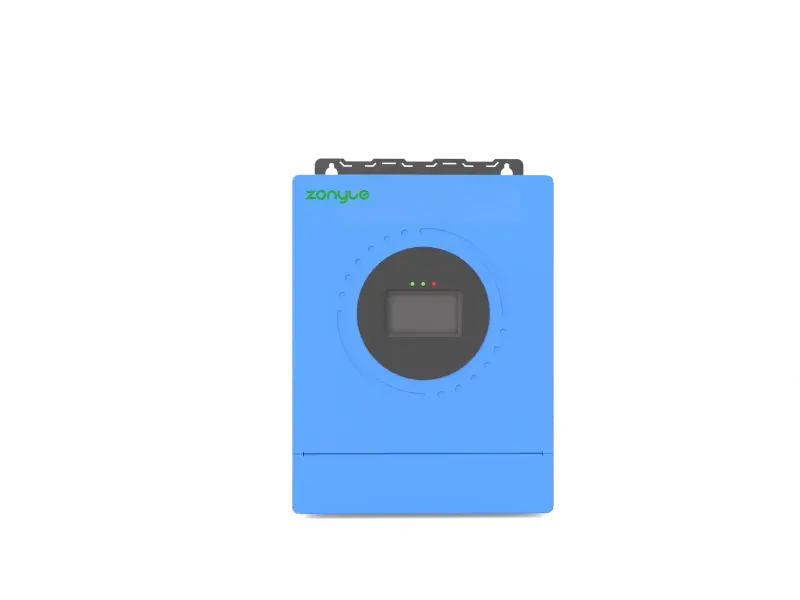
For grid-connected projects, inverter selection often focuses on conversion efficiency, MPPT configuration, input current, protection features, and compatibility with local grid standards. Multiple MPPT inputs can help manage solar panel strings installed at different orientations or under different shading conditions, depending on the inverter design. Protection features and enclosure ratings also matter, particularly for outdoor installations. Zonyue’s product range includes Solis grid-tied models featuring IP66 protection and multiple MPPTs, as well as Growatt grid-tied models with 20A string input specifications and AFCI protection. Buyers should confirm the exact specifications, applicable certifications, and grid compatibility before selecting a model for a project.
Off-Grid vs Grid-Connected Inverter: Key Differences
The main difference is how each inverter interacts with the electricity grid. An off-grid system is designed to supply loads without relying on a utility connection, while a standard grid-connected inverter operates in coordination with the grid. That distinction affects system design, equipment requirements, installation costs, and what happens when the utility supply is interrupted. Off-grid projects often need a carefully sized battery bank or another suitable source of power to cover periods when solar generation is insufficient. Grid-connected projects may need fewer storage components if backup power is not part of the project scope.
| Selection factor | Off-grid inverter | Grid-connected inverter |
| Typical application | Remote homes, farms, independent power systems | Residential and commercial grid-connected solar |
| Utility connection | Designed for independent operation | Requires compliant grid connection |
| Main sizing concerns | Load demand, surge power, battery capacity | PV array design, MPPT inputs, grid requirements |
| Battery requirements | Often used with batteries; confirm model capabilities | Not normally battery-ready unless specifically designed for it |
| Power during a grid outage | Depends on system configuration and available energy | Standard models usually shut down for anti-islanding protection |
Neither type is automatically more suitable for every project. The right choice depends on the site’s power supply, operating priorities, and technical requirements.
How to Choose the Right Inverter for Your Solar Project
Start by identifying how the site receives electricity and what the system needs to achieve. If the project is located far from the grid or requires independent operation, an off-grid solution may be appropriate. If the property has a stable utility connection and the goal is to use solar energy while remaining grid-connected, a grid-tied system may be a better fit. Projects that require backup power during outages need additional attention because not every grid-connected inverter can supply electricity when the grid is down.
Next, assess the electrical loads rather than relying only on the total daily energy consumption. Motors, pumps, refrigeration equipment, and other inductive loads may have high starting currents. Check the inverter’s continuous output, surge rating, voltage range, and compatibility with the planned loads. For off-grid installations, also calculate battery capacity and solar generation requirements based on expected usage and the available sunlight. For grid-connected projects, review the PV string voltage, input current, MPPT arrangement, and local interconnection rules. Finally, compare the full installed cost, including wiring, protection devices, batteries where required, mounting, and commissioning. A well-matched system is more useful than one selected on headline efficiency alone.
Choosing an Inverter for Commercial Solar Projects
For a solar inverter for commercial projects, purchasing decisions should account for the site’s operating schedule, load profile, expansion plans, and maintenance requirements. A small farm building with no reliable grid access has very different needs from a warehouse with a large rooftop solar array and an established utility connection. In the first case, the project team may prioritize independent operation, generator compatibility, and sufficient surge capacity. In the second, they may focus on PV input configuration, grid compliance, conversion efficiency, and the ability to manage the available roof area effectively.
It is also worth considering future changes. A business may add equipment, expand its building, or increase its solar capacity over time. Before ordering, ask the supplier about parallel operation, supported system configurations, monitoring options, warranty terms, and local technical support. Do not assume that two inverters with similar power ratings offer the same expansion or backup functions. Confirm the details in the datasheet and installation documentation, especially when integrating batteries or generators. For installers and distributors, matching the inverter to the project early can help avoid redesigns, unexpected accessory costs, and delays during commissioning.
Explore Off-Grid and Grid-Tied Inverter Options
Zonyue’s product range includes off-grid and grid-tied inverter options for different solar installation requirements. The Zonyue 3–12kW off-grid inverter is worth evaluating for projects that need MPPT solar charging and specified surge capability. The Growatt 8–12kW off-grid model may suit applications where parallel operation or generator integration is required, subject to its exact configuration. For grid-connected installations, the Solis grid-tied inverter offers features such as IP66 protection and multiple MPPTs, while the Growatt grid-tied model lists 20A string input and AFCI protection.
Before choosing a product, compare the full datasheet with your project’s operating voltage, load requirements, solar array design, environmental conditions, and local electrical standards. If battery backup is required, verify that the proposed inverter and system architecture explicitly support it. Reviewing these details with the supplier or installer helps ensure that the selected equipment matches the project’s real operating needs rather than just its advertised power rating.
FAQ
Can an off-grid inverter work without batteries?
It depends on the inverter model and system design. Some units may support limited battery-free operation under specific conditions, while others require a battery bank for stable operation. Check the manufacturer’s documentation before designing a system without batteries.
Does a grid-connected inverter work during a power outage?
A standard grid-connected inverter generally shuts down during a utility outage because of anti-islanding protection. This helps protect utility workers and equipment. Backup power requires an appropriately designed system with compatible equipment and a supported backup function.
Which inverter is better for a commercial solar project?
Neither option is universally better. An off-grid inverter may suit a site that needs independent power, while a grid-connected inverter may be appropriate for a business with utility access that wants to use solar generation. The decision should be based on grid availability, load requirements, backup needs, budget, and local regulations.
What should buyers check before ordering a solar inverter?
Confirm rated output, surge capability where relevant, PV input voltage and current, MPPT configuration, battery compatibility, protection features, certifications, warranty coverage, and technical support. For commercial projects, also check expansion options and whether the inverter meets local grid-connection requirements.