Is a 50kW Outdoor Commercial Battery Cabinet the Sweet Spot? (2026 C&I Guide)
Release time: 2026-04-23
Table of Contents
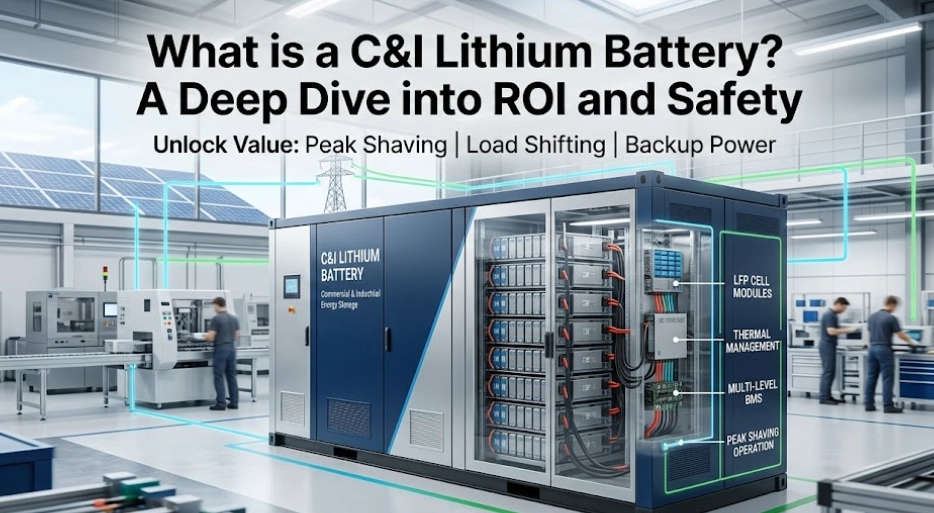
Mid-sized manufacturing plants, sprawling retail centers, and busy electric vehicle (EV) charging hubs all share a common, expensive enemy: punishing peak-demand electrical charges. When unpredictable utility bills consistently eat into operational profit margins, deploying localized energy storage is the most logical next step. However, navigating the capacity sizing game is notoriously tricky for procurement teams. Going too small yields negligible financial impact against heavy industrial loads, while over-engineering a massive megawatt-scale system destroys the projected return on investment. This is precisely why the 50kW outdoor commercial battery cabinet has rapidly emerged as the definitive workhorse for Commercial and Industrial (C&I) applications in 2026, perfectly balancing usable capacity, physical footprint, and initial capital expenditure.
Capacity Comparison: 50kW vs. 100kW Systems
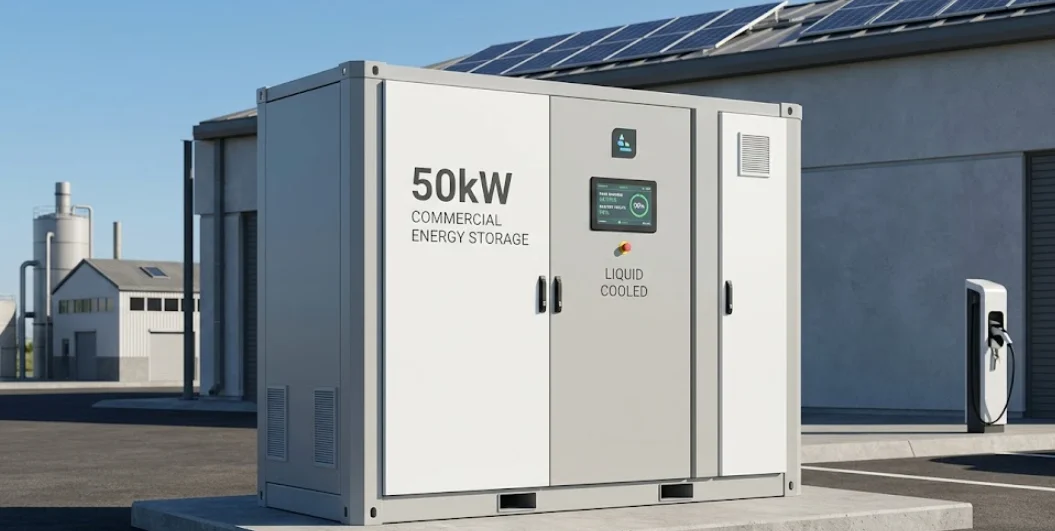
When facility engineers evaluate energy storage, the debate often comes down to 50kW versus 100kW systems. While a 100kW system offers double the discharge power, it frequently triggers complex regulatory hurdles. Upgrading to a 100kW system usually requires extensive grid interconnection studies, expensive transformer upgrades, and complex local zoning permits. Conversely, a 50kW outdoor commercial battery cabinet typically falls under the threshold for fast-track permitting in many jurisdictions. It provides enough instantaneous power to shave the most aggressive demand peaks without requiring a complete overhaul of the facility’s existing electrical infrastructure. This “plug-and-play” nature significantly accelerates the deployment timeline, allowing businesses to start capturing energy savings months earlier than larger, utility-scale counterparts.
Decoding the IP54 Rating and Thermal Reality
One of the most costly mistakes in facility management is purchasing an indoor-rated energy storage system (ESS) and attempting to retrofit it for an outdoor environment. A true outdoor system must carry a verified IP54 enclosure rating or higher. This specific engineering standard guarantees the unit’s ability to survive windblown dust and splashing water from all directions. However, a rugged, sealed exterior introduces intense thermal management challenges. An improperly cooled 50kW outdoor commercial battery cabinet will suffer from massive “parasitic load.” This occurs when the internal HVAC system consumes a high percentage of the stored energy just to prevent the internal lithium iron phosphate (LFP) cells from overheating during summer months. Selecting units with advanced liquid-cooling technology reduces temperature variance to under 3°C, safeguarding the long-term battery health.
Peak Shaving and Software Integration Pitfalls
The primary financial engine driving these installations is aggressive peak shaving. By utilizing the Battery Management System (BMS) to discharge exactly when facility loads spike, demand charges can be slashed by up to 40%. However, a frequent headache during the installation of a 50kW outdoor commercial battery cabinet involves software microgrid compatibility. If the proprietary BMS cannot communicate via standard protocols (like Modbus TCP or CAN bus) with legacy solar inverters or central grid controllers, the hardware becomes effectively useless. Another brutal real-world pitfall is underestimating the civil engineering requirements. Pouring a substandard concrete pad without proper drainage leads to settling issues, which can warp the cabinet chassis and permanently compromise the vital IP54 weather seals over time.
Securing Long-Term Asset Profitability
For operations that have outgrown residential-scale batteries but simply do not require the massive footprint of utility-scale containers, this specific capacity threshold is undeniably the most strategic investment. Prioritizing robust liquid thermal management, demanding seamless, open-protocol software integration, and respecting the rigorous physical demands of an outdoor deployment guarantees success. Taking these critical engineering steps ensures that a properly configured 50kW outdoor commercial battery cabinet will serve as a highly reliable, profit-protecting asset for well over a decade, shielding commercial enterprises from an increasingly unstable and expensive energy grid.