How Does a Battery Energy Storage System Support the Future of Renewable Energy?
Release time: 2026-09-22
Table of Contents
As solar and other renewable energy sources become more widely deployed, the challenge is no longer simply generating clean electricity. The bigger question is how to use that electricity when it is needed most. Solar production, for example, can peak during the middle of the day while commercial and industrial electricity demand may remain high in the afternoon or evening. This mismatch makes energy storage increasingly important.
A Battery Energy Storage System can bridge this gap by storing electricity when renewable generation is available and releasing it when demand increases. For commercial and industrial projects, this approach can improve renewable energy utilization, reduce peak electricity demand, and provide backup power when grid conditions are unstable.
Why Does Renewable Energy Need Battery Storage?
Renewable energy is naturally variable. Solar power depends on sunlight, while wind generation changes with weather conditions. Without an effective way to store excess generation, part of the electricity produced during high-generation periods may not be used immediately.
Battery storage changes this operating model. Instead of sending all available solar power directly to the load or grid, an energy storage system can capture surplus electricity and make it available later. This creates a more flexible relationship between renewable generation and electricity consumption.
For businesses with significant daytime solar production, this can be particularly useful. Energy generated during periods of strong sunlight can be stored and then discharged when the facility’s electricity demand increases. The result is a more consistent use of renewable energy throughout the day.
How Does a Battery Energy Storage System Improve Renewable Energy Utilization?
The most practical application is often a solar-plus-storage configuration. During periods when PV generation exceeds the facility’s immediate consumption, the surplus electricity can charge the battery. When solar production decreases or electricity demand rises, the stored energy can be discharged.
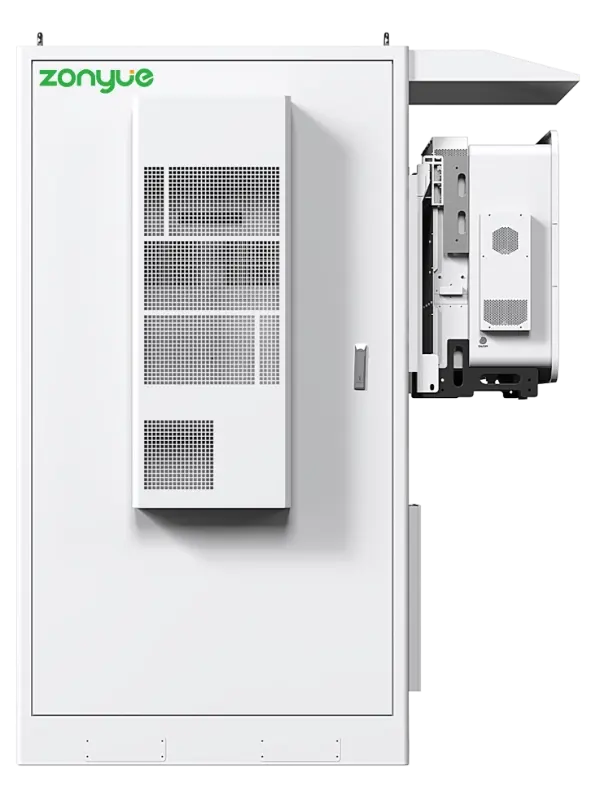
Zonyue’s 257kWh/125kW solar-storage integrated outdoor ESS is designed around this type of application. The system integrates the battery, inverter, and PV input into one outdoor cabinet, with up to 120kW of PV input and 257kWh of rated energy. Its LFP battery configuration, intelligent air cooling, IP54 protection, and integrated fire protection make it suitable for commercial and industrial outdoor deployments.
This integrated architecture can also simplify project deployment because the major energy storage components are housed within a single solution rather than requiring multiple separate cabinets.
Can BESS Help Commercial and Industrial Users Reduce Peak Electricity Demand?
Renewable energy integration is only one part of the value of energy storage. For commercial and industrial users, the ability to manage when electricity is consumed can be equally important.
A facility may experience short periods of high electricity demand even when its overall daily consumption is relatively stable. Instead of drawing all required power from the grid during these peaks, the energy storage system can discharge stored electricity to support the load.
This process, commonly known as peak shaving, can reduce dependence on grid electricity during expensive or high-demand periods. Energy can also be shifted from lower-cost periods to higher-demand periods, depending on the local electricity tariff structure.
For smaller commercial facilities, Zonyue’s 50kW/50kWh outdoor commercial ESS provides a compact option for applications such as shops, farms, and smaller industrial facilities. For projects requiring greater capacity, the 112kWh/50kW all-in-one C&I ESS provides additional storage capacity while supporting solar self-consumption, peak shaving, and backup applications.
How Does BESS Provide Backup Power When the Grid Is Unavailable?
Another important role of energy storage is improving power resilience. Grid interruptions can affect production equipment, refrigeration, communications, data processing, and other critical loads. A battery system can provide stored electricity when the grid supply is interrupted, helping facilities maintain essential operations.
When combined with solar PV, the system can provide an additional layer of energy flexibility. Instead of relying entirely on a conventional backup generator, a solar-plus-storage configuration can use stored renewable electricity to support selected loads.
For example, Zonyue’s 257kWh/125kW integrated ESS supports backup applications and optional off-grid operation. Its automatic switching capability can help maintain continuity for critical loads during grid interruptions, making the system suitable for facilities where power availability is important.
What Makes an Energy Storage Battery Cabinet Suitable for Renewable Energy Projects?
Choosing an energy storage cabinet involves more than looking at its nominal capacity. Battery chemistry, power output, thermal management, protection, and communication capabilities all affect how effectively the system can operate in a real project.
LFP battery technology is widely used in modern energy storage because of its combination of safety, cycle performance, and operating stability. Thermal management is also important because battery temperature can influence performance and service life. For outdoor installations, protection against environmental conditions and an appropriate fire protection design are equally important.
The 112kWh/50kW C&I solution from Zonyue, for instance, uses LFP314Ah battery cells together with IP54 protection, air cooling, integrated fire protection, and RS485/CAN communication. These features allow the cabinet to function as part of a broader commercial energy management setup.
How Can Different BESS Capacities Fit Different Renewable Energy Applications?
There is no single storage capacity suitable for every renewable energy project. Smaller commercial facilities may require tens of kilowatt-hours, while factories and larger PV installations can require hundreds of kilowatt-hours or even megawatt-hours.
A 50kWh-class system can be appropriate for smaller commercial loads and moderate solar self-consumption requirements. A 112kWh system can provide greater flexibility for C&I peak shaving and backup. For larger industrial facilities, Zonyue’s 241kWh/125kW industrial ESS provides a higher-power platform for load management, backup power, and renewable energy integration.
At the utility scale, Zonyue also offers 1.2MWh 20-foot and 2.4MWh 40-foot containerized energy storage solutions. This range allows storage capacity to be matched more closely with project size, load characteristics, PV generation, and required backup duration.
Why Will Battery Energy Storage Become More Important as Renewable Energy Expands?
As renewable generation continues to grow, energy systems will need more flexibility to balance generation, consumption, and grid conditions. Battery storage provides that flexibility by moving electricity across different times of the day rather than requiring generation and consumption to occur simultaneously.
For commercial and industrial users, the value of storage can therefore extend beyond renewable energy. It can support solar self-consumption, peak shaving, load management, backup power, and greater energy resilience within one integrated solution.
Zonyue’s range of outdoor energy storage cabinets and containerized ESS products is designed to address different project scales, from smaller C&I applications to larger industrial and utility deployments. As renewable energy becomes a larger part of the electricity mix, this ability to store and intelligently manage power will become increasingly important.
FAQ
What is a Battery Energy Storage System used for?
A BESS stores electricity and releases it when required. In renewable energy projects, it can improve solar self-consumption, shift electricity usage, reduce peak demand, and provide backup power.
How does BESS support solar energy?
BESS can store excess solar electricity during periods of high PV generation and discharge it when solar output falls or electricity demand increases. This helps reduce unused solar generation and improves the overall utilization of a PV system.
How do you choose the right BESS capacity?
The appropriate capacity depends on the facility’s electricity load, peak demand, PV generation, required backup duration, and operating strategy. Both battery capacity in kWh and power output in kW should be considered when sizing the system.